Federal investment will help expand a program built on vision, collaboration, and a decade of innovation.
What do a chocolate mold, a tiny home, thousands of face shields, and a former loading dock have in common?
They all tell the story of Laney College's FabLab.
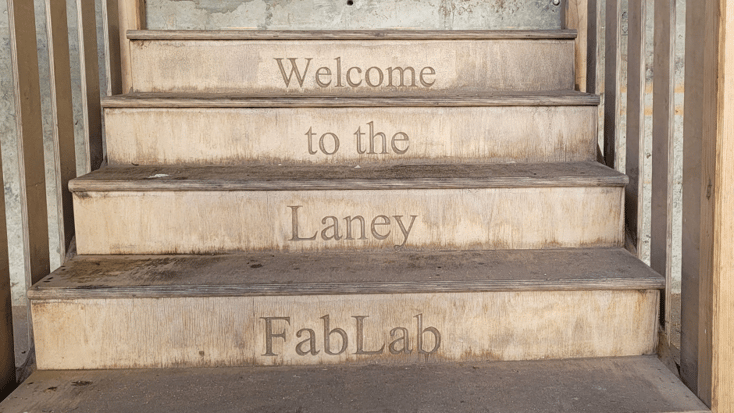
Today, the Laney College FabLab is recognized as one of the Bay Area's premier digital fabrication spaces, where students from dozens of disciplines turn ideas into prototypes using laser cutters, CNC routers, 3D printers, robotics, and other advanced manufacturing technologies. More than a decade ago, it was little more than an overlooked concrete loading dock behind the Odell Johnson Theatre.
"It took a carpentry teaching assistant named Danny Beesley to look at that slab and see a potential space for ideas," said Karl Seelbach, Chair of Laney's Carpentry Department and Co-Coordinator of Career Education.
At the time, programs like Carpentry and Digital Fabrication were commonly known as Career Technical Education (CTE). Today, Laney College uses the term Career Education (CE), reflecting the broad range of career pathways and transfer opportunities these programs provide.
A Vision Built From Scratch
The idea began in 2012.
Inspired by advances in prefabricated housing and digital manufacturing overseas, Danny Beesley envisioned a fabrication lab where students from every major—not just Career Education—could design and build almost anything. With no funding available, he built the first proof of concept himself at Castlemont High School, demonstrating what a FabLab could become.
Back at Laney, five departments came together to make the vision a reality:
Faculty member Cynthia Correia also played a pivotal role in strengthening the FabLab's early vision. Leveraging her faculty leadership and institutional knowledge, she helped transform the emerging makerspace into a campus-wide initiative that ultimately grew into a formal academic program.
Together, these departments and faculty leaders transformed borrowed space into one of California's most innovative educational makerspaces.
"The kind of interdepartmental harmony that made this possible is rare," Seelbach reflected. "It's one of the reasons I feel so fortunate to work at Laney."
The FabLab officially took shape between 2015 and 2017 as faculty, staff, and students built benches, installed electrical systems, assembled dust collection, and brought in equipment—much of it through donated labor and determination.
Learning by Making
Today, the FabLab serves students across numerous disciplines, including Architecture, Art, Carpentry, Wood Technology, Machine Technology, Welding, Engineering, Anthropology and more.
Students learn to transform digital designs into finished products while gaining experience with the same equipment used throughout modern manufacturing industries.
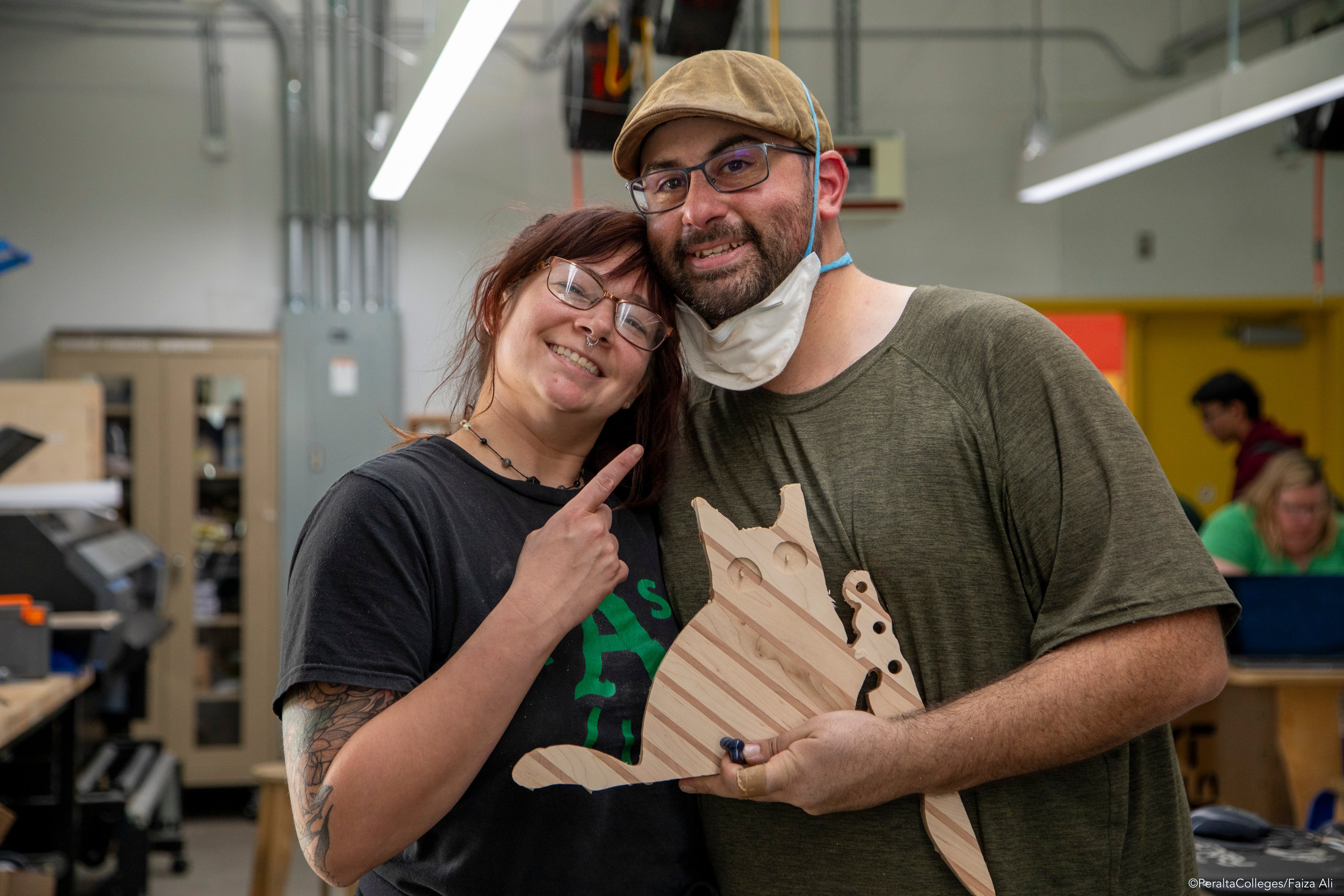
Under the leadership of Digital Fabrication Coordinator Holly Morris, along with Carpentry faculty member Matt Wolpe, the FabLab has become a space where instruction comes alive through hands-on learning.
Over the years, students have:
- Designed products sold online
- Created custom molds for local businesses
- Built prototypes for affordable housing
- Produced thousands of face shields for Bay Area healthcare workers during the COVID-19 pandemic
- Developed entrepreneurial projects that blend creativity with manufacturing
A New Home for Innovation
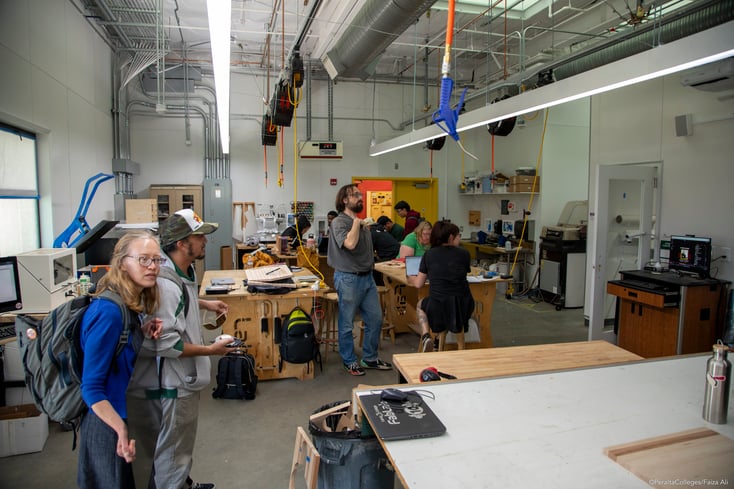
After years of operating in its original location, the Laney College FabLab recently moved into a larger, upgraded space designed to better serve the growing number of students and programs that rely on digital fabrication.
The expanded facility provides more room for instruction, collaboration, and advanced equipment, allowing students from across campus to explore everything from product design and prototyping to digital manufacturing and entrepreneurship.
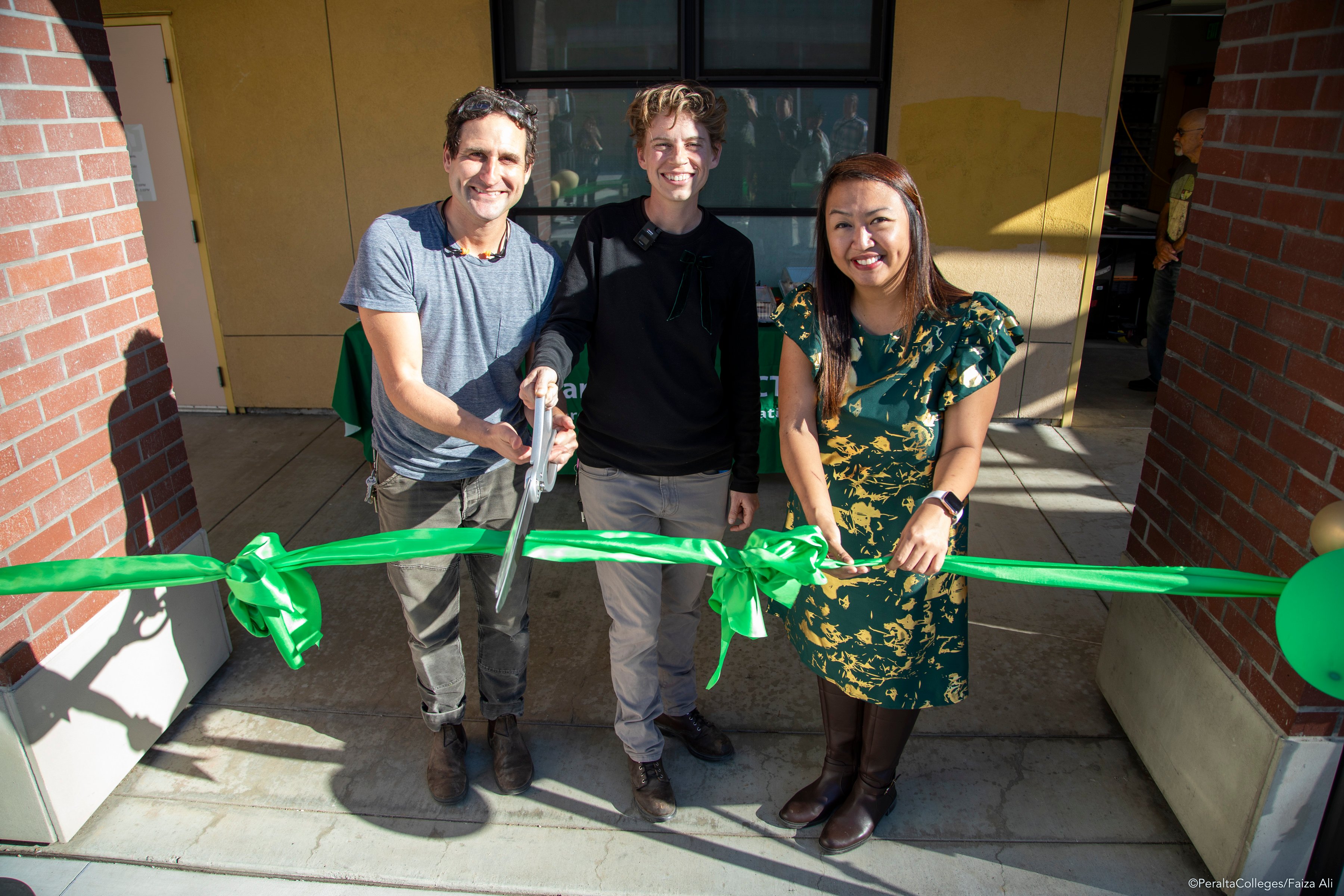
For Seelbach, the move represents another milestone in the FabLab's evolution. "The new space gives us room to continue expanding what's possible for our students," he said.
Helping Shape California's Future
The FabLab's influence extends well beyond Laney College.
Led by longtime FabLab leader Rick Rothbart, with significant contributions from Levi Williams, California officially established Digital Fabrication Technology as its own instructional discipline. Rothbart authored the curriculum and successfully guided it through California's statewide curriculum approval process, resulting in the first new California community college instructional discipline approved in more than a decade.
That means community colleges throughout California now have a clear pathway to develop Digital Fabrication Technology programs built upon the curriculum and educational model pioneered at Laney College.
What started as a bold idea has grown into a statewide model for hands-on, interdisciplinary education—proof that innovation often begins with people willing to build something from the ground up.
A New Investment in Student Success
The new facility marks a significant step forward, but the work isn't finished.
On July 8, 2026 Laney College welcomed Congresswoman Lateefah Simon, Peralta Chancellor Dr. Tammeil Gilkerson, Laney College President Dr. Rebecca Opsata, College of Alameda President Dr. Melanie Dixon, faculty, staff, and students to celebrate $250,000 in federal Community Project Funding secured for the FabLabs at Laney College and College of Alameda.
The funding will modernize equipment, expand training opportunities, and help prepare students for careers in advanced manufacturing, construction, biomedical technology, healthcare, and other high-demand industries.
The event also recognized the many people who helped transform an ambitious idea into reality—including Alejandra Tomas, whose leadership and support have been instrumental in the FabLab's continued growth, along with countless faculty, staff, and students who spent years building the program one project at a time.
"This funding represents the next chapter," Seelbach said. "For years, we built this program through grants, donated time, shared equipment, and determination. Now we can invest in the future on purpose."
View all photos from the FabLab funding announcement →
Watch the FabLab funding announcement →
Looking Ahead
The next chapter for Laney's FabLab is entrepreneurship.
Faculty envision students not only designing products, but learning how to launch businesses around them, transforming prototypes into companies while continuing Laney's tradition of learning by making.
It is fitting that one of California's most innovative educational makerspaces began on a forgotten loading dock, because at Laney College, innovation often starts by seeing possibilities where others see empty space.
Learn more about Peralta Colleges' Career Education programs in Digital Fabrication and the FabLabs at Laney College and the College of Alameda:


